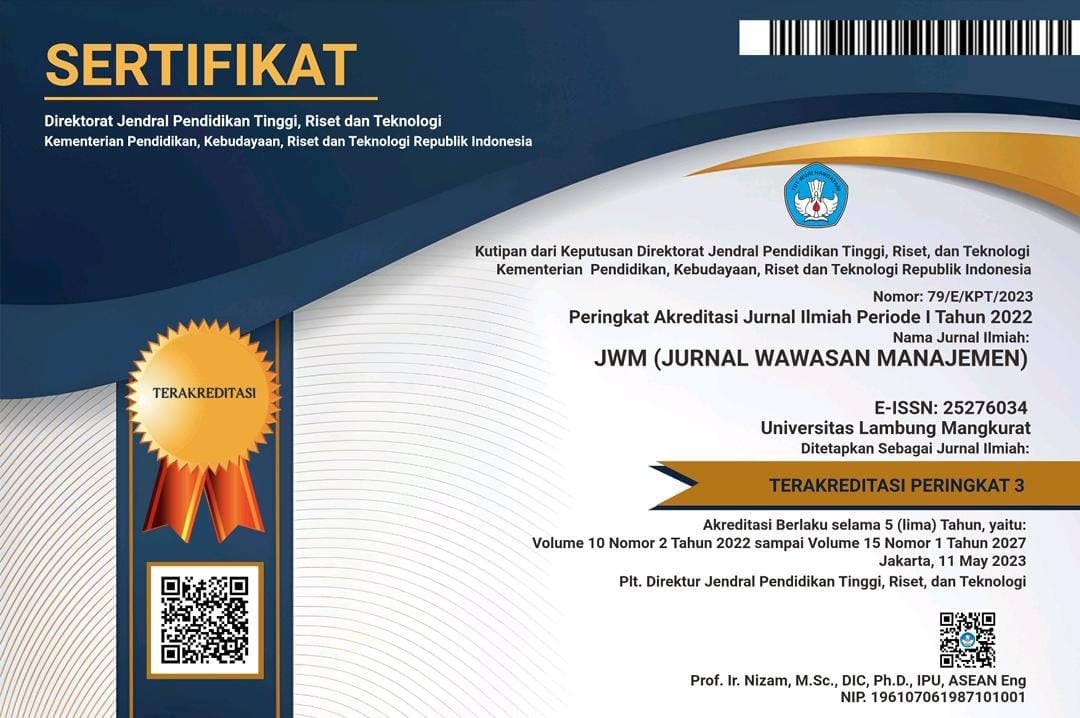
Effect of Intellectual Intelligence, Emotional Intelligence, And Work Discipline on Employee Performance (A Study on Employee PT. AmanahAnugerah Adi Mulia Banjarmasin)
DOI:
https://doi.org/10.20527/jwmthemanagementinsightjournal.v8i2.44Keywords:
intellectual intelligence, emotional intelligence, work discipline, performanceAbstract
This research aims to analyze the effect of intellectual intelligence (X1), emotional intelligence (X2), and work discipline (X3) as independent variables on employee performance (Y) as the dependent variable on employees of PT. AmanahMuliaAnugerah Adi Banjarmasin.
This research method uses a questionnaire with a population of 35 employees of PT. Banjarmasin Adi MuliaAnugerah mandate which was taken as a research sample. Variable measurement technique using Likert scale with weighting scale from 1 to 5. The analysis technique used in testing the hypothesis in this study using multiple regression analysis.
The result of research concludes that there was no significant influence on the variables of intellectual intelligence and emotional intelligence on employee performance, there was a significant influence between the variables of work discipline on employee performance.
Downloads
References
Ariana, I., & Riana, I. (2013). Influence Leadership, Compensation, and Labor Discipline the Employee Performance at the Hotel Cendana Resort & Spa Ubud, Gianyar. E-Journal of Management, University of Udayana, 1-10.
Fahmi, I. (2015). Theory and Application Performance Management. Bandung: Alfabeta.
Goleman, D. (2002). Emotional Intelligence. Jakarta: PT. Gramedia Pustaka Utama.
----------------. (2007). Emotional Intelligence. Jakarta: PT. Gramedia Pustaka Utama.
----------------. (2015). Emotional Intelligence. Jakarta: PT. Gramedia Pustaka Utama. Hamali, LM (2016). Understanding of Human Resource Management. Strategy
Managing Employees. Yogyakarta: CAPS.
Handoko, H. (2008). Personnel Management and Human Resources. Molds sixteenth.
Yogyakarta: BPFE.
Marpaung, R., & Rumondang, C. (2013). Effect of Intellectual Intelligence, Emotional Intelligence and Spiritual Intelligence on Employee Performance PT. Angkasa Pura II Branch SSK II Pekanbaru. Pekbis Journal, 179-189.
Daughter, YS (2016). Effect of Intellectual Intelligence, Emotional Intelligence, and Work Environment on Employee Performance PT. PLN Persero Klaten area. Journal of Management & Organization Studies, 88-97.
Robbins, S. (2006). Organizational behavior. Jakarta: PT. Index.
Sinambela, LP (2018). Human Resource Management. Build a Solid Work Team to
Improve Performance. Jakarta: Earth Literacy.
Sternberg, RJ (2000). Intelligence. United Kingdom: The Press Syndicate of the
University of Cambridge.
Wibowo. (2016). Behavior in Organization. Jakarta: Rajawali Pers.
Widodo, S. (2012). New Ways to Empower Yourself Faster Happiness, Success and
Prosperity. Jakarta: PT. Gramedia Pustaka Utama. Wirahimaja. (2003). Human Resource Management. Jakarta: Erland.
Yenti, N., Machasin, and Proverbs, C. (2014). Effect of Emotional Intelligence, Intellectual Intelligence and Discipline to Performance PMC Hospital Nurses in Pekanbaru. Jom FEKON, 1-21.
Yudistiro, IA (2015). Effect of Emotional Intelligence, Work Environment, and the Discipline of the Teacher Performance with Organizational Commitment as moderation. Journal of Human Resource Management, 38-50.

Downloads
Published
Issue
Section
License
Copyright (c) 2022 JWM (JURNAL WAWASAN MANAJEMEN)

This work is licensed under a Creative Commons Attribution 4.0 International License.